Georgia students pressure Oreo maker to protect Okefenokee Swamp
Student coalition targets Oreo manufacturer over titanium dioxide sourcing near Georgia’s iconic wetland, but companies remain silent on conservation pleas.

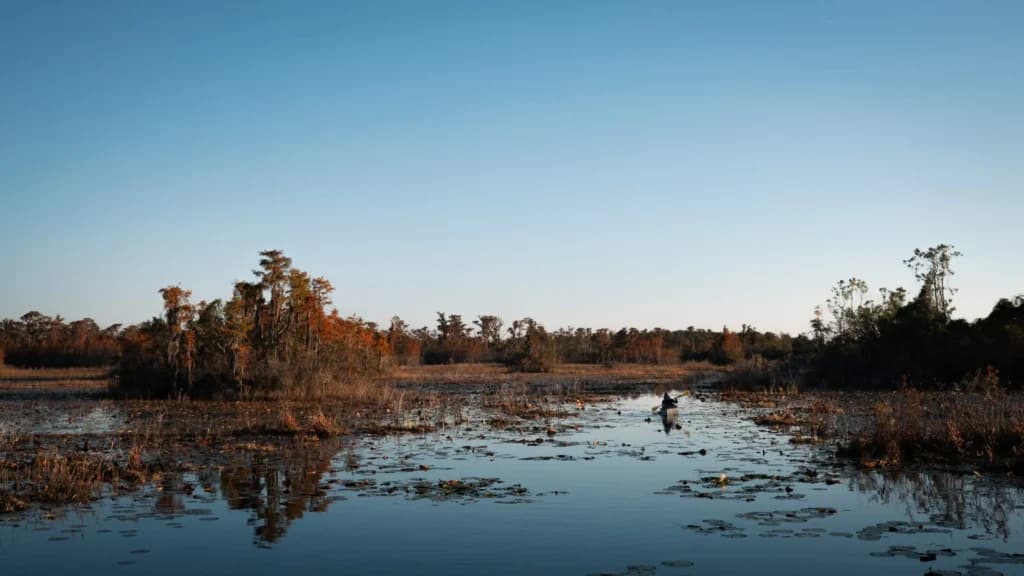
ATLANTA, GEORGIA — A coalition of Georgia students is urging Oreo manufacturer Mondelez International to pledge never to source titanium dioxide from areas near the Okefenokee Swamp, citing threats that mining poses to the historic wetland.
The Georgia Student Swamp Coalition formed the campaign after learning that the white filling in Oreo cookies contains titanium dioxide, a mineral found in deposits along Trail Ridge, just east of the Okefenokee Swamp. The Chicago-based multinational company manufactures candies, beverages, and snacks.
“In so doing, Mondelez will show all of Georgia and the world that it is a company worthy of its reputation as a global leader in sustainability,” the students wrote in a letter to the company.
Corporate Silence
The student coalition has not received any response from Mondelez, despite specifically targeting board member Ertharin Cousin, a University of Georgia School of Law graduate who advocates for sustainable food supply. Cousin founded and led the nonprofit Food Systems for the Future Institute.
The silence from Mondelez mirrors responses from other companies the coalition has contacted. Since forming in February 2025, the Georgia Student Swamp Coalition has sent letters to Home Depot, which sells paint and other products containing titanium dioxide, along with landowners Rayonier and Toledo Manufacturing, which own property along Trail Ridge.
The group also wrote to Chemours, a mining company. None of the companies have acknowledged the letters, according to the coalition.
Reaching University Leadership
In September 2025, the Georgia Student Swamp Coalition wrote to Sonny Perdue, chancellor of the University of Georgia system, praising his support of the Okefenokee and urging him to take more action to protect the swamp.
The Okefenokee Swamp spans approximately 438,000 acres across southeastern Georgia and northern Florida, serving as one of the largest intact freshwater ecosystems in the United States. The swamp provides habitat for numerous wildlife species and serves as the headwaters for both the Suwannee and St. Marys rivers.
Trail Ridge, located along the eastern edge of the swamp, contains deposits of heavy minerals including titanium dioxide. The mineral serves as a white pigment in various consumer products, from food items like cookie fillings to paints and cosmetics.
Environmental groups have long opposed mining operations near the Okefenokee, arguing that extraction activities could alter water flow patterns and damage the delicate ecosystem. The swamp was designated a National Wildlife Refuge in 1937 and recognized as a Wetland of International Importance under the Ramsar Convention.
The student coalition represents the latest effort to engage corporate stakeholders in conservation efforts for the Okefenokee. By targeting companies that use titanium dioxide in their products, the students aim to create market pressure against mining operations near the swamp.
Mining companies have previously sought permits to extract heavy minerals from Trail Ridge, though regulatory battles and environmental concerns have complicated such proposals. The Georgia Environmental Protection Division and federal agencies typically review mining permit applications for potential impacts on water resources and wildlife habitats.