North Carolina senators propose bills to modify decades-old seawall ban
Senator Bob Brinson introduces legislation that could end North Carolina’s decades-old ban on coastal seawalls as erosion destroys homes and infrastructure.

RALEIGH, NORTH CAROLINA — Two new bills introduced Wednesday in the state Senate could change North Carolina’s approach to coastal protection, potentially ending a seawall ban that has been in place since the late 1970s.
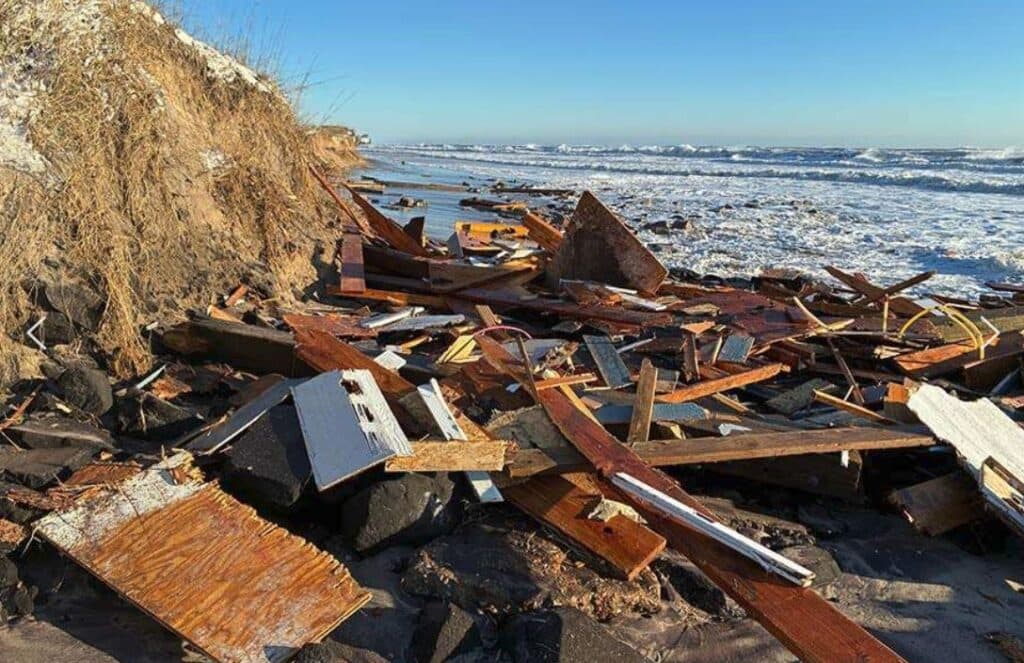
Senator Bob Brinson (R-Craven) filed the legislation as coastal erosion continues to impact barrier island communities, with 32 privately owned structures collapsing along the Cape Hatteras National Seashore over the past six years. Twenty homes have collapsed in Buxton alone since September 2025, according to Brinson.
Two-Bill Approach to Coastal Protection
Senate Bill 1009 would eliminate the current ban on hardened coastal structures and require the North Carolina Collaboratory to update the state beach and inlet management plan. The companion measure, Senate Bill 1008, would establish a pilot program authorizing construction of shoreline stabilization projects where oceanfront homes face imminent danger from the ocean.
“This is not just a private property issue,” Brinson told members of the Senate Agriculture, Energy and Environment committee. “When a house falls into the ocean, debris spreads across miles of public beach. Septic systems and utilities are damaged. Public safety is threatened, and a local tax base disappears.”
The North Carolina Coastal Resources Commission enacted the original seawall ban in the late 1970s to protect the state’s sandy beaches and barrier islands from hardened structures that could disrupt natural coastal processes.
Growing Infrastructure Costs
Coastal erosion has taken a significant financial toll on state infrastructure maintenance. The North Carolina Department of Transportation has spent $17 million on routine maintenance of Highway 12 in Dare County since 2010, plus an additional $51 million on storm repairs.
On Ocracoke, the state has invested nearly $19 million since 2018 maintaining just a two-mile stretch where ocean waters consistently wash over the highway. The coastal erosion threat extends beyond Buxton to communities including Rodanthe, North Topsail and Figure Eight Island.
Pilot Program Restrictions
Brinson emphasized that projects under Senate Bill 1008 would operate under strict limitations and close monitoring, with no state funds required for implementation. The pilot program would focus on areas where homes face immediate risk of ocean loss.
“What we’re asking is whether modern, site-specific options exist that would protect homes, roads, utilities, and public beaches without causing unacceptable impacts,” Brinson said during the committee presentation.
The bills represent a policy shift for a state that has long prioritized natural coastal processes over hardened protection structures, as lawmakers address accelerating erosion rates and mounting infrastructure costs along the Outer Banks.