Black midwives sue Georgia over regulations limiting practice scope
Black midwives challenge regulations in Georgia, Alabama and Mississippi, arguing current laws restrict their ability to serve patients in areas with high maternal mortality rates.

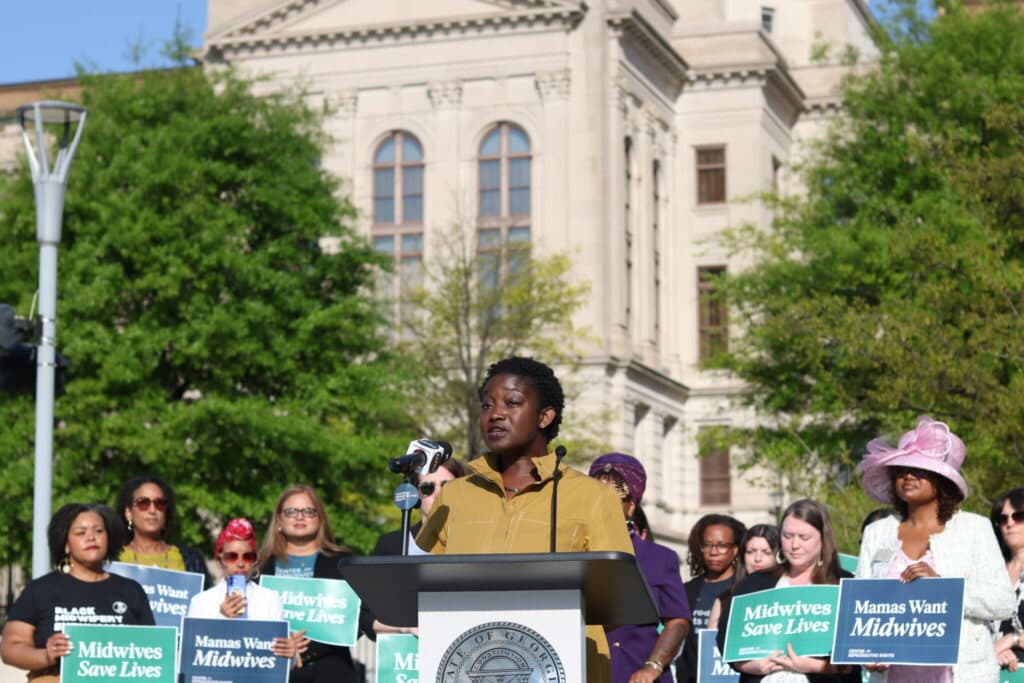
ATLANTA, GEORGIA — Black midwives across the South are challenging state regulations through federal lawsuits, claiming current laws restrict their ability to provide maternal care in a region with some of the nation’s highest maternal mortality rates.
Tamara Taitt, executive director of the Atlanta Birth Center, joined midwives in filing lawsuits against Georgia, Alabama, and Mississippi over requirements that force midwives to establish collaborative practice agreements with physicians before providing care.
The litigation targets state regulations that require midwives to work under physician oversight and apply hospital-level regulations to birth centers that assist with low-risk pregnancies. Midwives say these requirements limit their scope of practice and make it harder to serve patients in underserved communities.
Stark Racial Disparities in Maternal Deaths
The legal challenge comes amid alarming maternal mortality statistics that disproportionately affect Black women. According to 2024 data from the Centers for Disease Control and Prevention, the U.S. maternal mortality rate was 17.9 deaths per 100,000 births.
However, Black women faced a maternal mortality rate of 44.8 deaths per 100,000 births, making them two-and-a-half times more likely to die from pregnancy-related complications than the national average. Southern states consistently report maternal mortality rates higher than the overall U.S. rate.
Research shows that culturally congruent care, where patients receive treatment from providers who share their background, can improve maternal health outcomes. Despite this evidence, 82% of the nation’s nearly 15,000 certified midwives are white, according to 2025 demographic data from the American Midwifery Certification Board.
Legislative Efforts Stalled
The midwives pursuing litigation said they turned to the courts after efforts to expand their practice scope through state legislatures failed to advance. They argue that midwives can help improve birthing outcomes and provide essential care in rural and underserved areas where physician access is limited.
Birth centers operated by midwives focus on assisting labor and delivery for low-risk pregnancies, offering an alternative to hospital births. However, current state regulations in the three targeted states subject these facilities to similar oversight requirements as full-service hospitals.
The collaborative practice agreements required in Alabama, Georgia, and Mississippi can prove difficult to obtain, as some physicians may be reluctant to work with midwives or establish formal partnerships.
Expanding Access to Care
Advocates for expanding midwifery practice argue that removing regulatory barriers could help address the maternal health crisis affecting Black women and rural communities throughout the South. They contend that midwives can provide culturally sensitive care and help fill gaps in maternal healthcare access.
The lawsuits seek to challenge the constitutionality of current state regulations and expand the ability of certified midwives to practice independently. The litigation represents part of a broader effort to address maternal mortality disparities and improve access to culturally appropriate healthcare.
Taitt spoke about the legal challenge during a news conference held outside the Georgia State Capitol in April, highlighting the need for regulatory reform to expand midwifery practice in the state.