Supreme Court Election Rulings Create Chaos Across Southern States
Supreme Court’s selective enforcement of election timing rules has led to suspended primaries and last-minute map changes across the South.

COLUMBUS, OHIO — The U.S. Supreme Court’s inconsistent application of election timing principles has created confusion and disrupted voting processes across multiple Southern states. Election law experts warn that the court’s uneven rulings are benefiting Republican-controlled states at the expense of Black political representation.
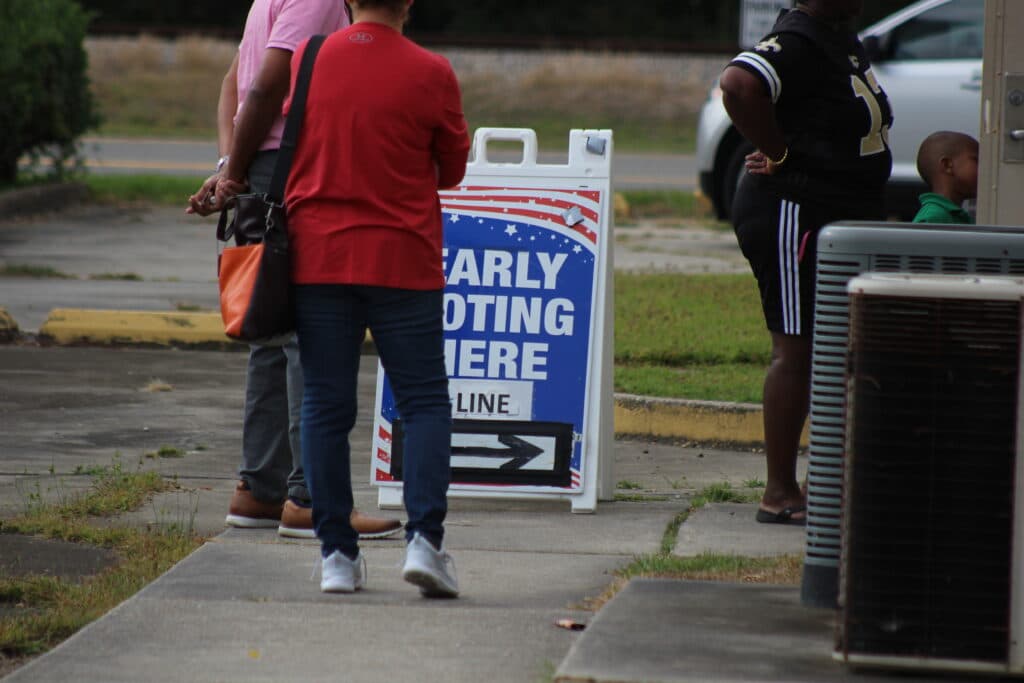
Louisiana Governor Jeff Landry suspended the state’s May 16, 2026 party primary elections for six U.S. House districts after early voting had already begun, following a Supreme Court decision that threw out Louisiana’s existing congressional map. The suspension came as voters had already started casting ballots in affected districts.
The chaos stems from the Supreme Court’s selective enforcement of what experts call the “Purcell principle,” a doctrine established in the 2006 case Purcell vs. Gonzalez that federal courts should avoid ordering major election changes close to voting dates to prevent voter confusion.
Court’s Inconsistent Approach Under Scrutiny
When the Supreme Court allowed Texas’ gerrymandered congressional map to take effect in December, the conservative majority criticized a lower court for “improperly inserting itself into an active primary campaign” when it blocked the map more than three months before the election. However, the court is now making last-minute changes that directly impact ongoing elections.
“The court has not thought through them and it seems like when the principle is applied, it’s applied selectively,” said Wilfred Codrington III, a professor of law at the Benjamin N. Cardozo School of Law in New York who has studied the Purcell principle.
Codrington noted that while limiting voter confusion makes sense, the principle “just falls apart” because the Supreme Court has never answered fundamental questions about the doctrine, such as how close to an election is too close for changes.
Rush to Eliminate Black-Majority Districts
Republican-controlled Southern states are racing to redraw congressional maps to eliminate majority-Black districts, many of which have elected Black Democrats to Congress. This gerrymandering effort has accelerated even with early voting underway in some states.
Election law experts argue that the Supreme Court’s recent decisions effectively allow last-minute election changes in Southern states that carry major consequences for voter district assignments and the future of Black political representation across the region.
The court’s liberal justices have joined election law experts in criticizing what they describe as the uneven application of timing principles that consistently favor Republican interests.
National Implications for Election Integrity
The Supreme Court’s approach to election timing has created a patchwork of inconsistent standards across the country. For the past two decades, the court has advanced the concept that federal courts should limit major electoral changes near election dates, but experts say the selective enforcement undermines the principle’s stated purpose.
The ongoing disruptions highlight tensions between federal oversight of election processes and state-level redistricting efforts, particularly in states with histories of voting rights violations. As primary elections continue across multiple states, the impact of these last-minute map changes on voter participation and representation remains to be seen.
Legal challenges to the redistricting efforts are expected to continue through the courts, though the Supreme Court’s recent pattern of decisions suggests limited federal intervention in Republican-led redistricting initiatives.