Ohio Governor Candidates Clash Over Education Funding Ahead of Election
Democratic Dr. Amy Acton wants full education funding while Republican Vivek Ramaswamy demands results first as Ohio faces $3 billion school shortfall.

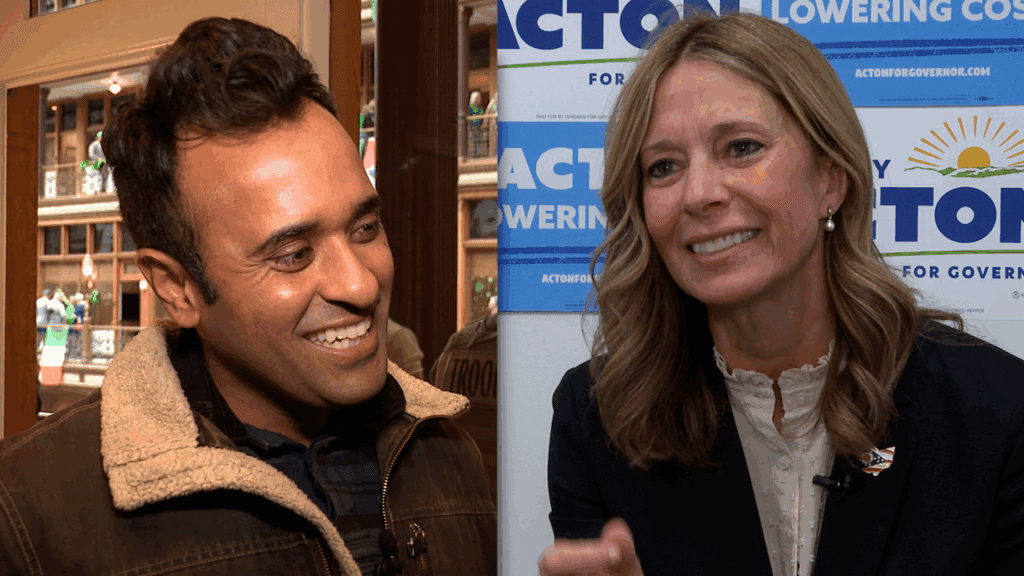
COLUMBUS, OHIO — Ohio’s gubernatorial candidates are presenting different visions for public education funding as the state faces a nearly $3 billion shortfall over the next two years, according to the nonpartisan research group Policy Matters Ohio.
Democratic candidate Dr. Amy Acton supports fully funding public education to help districts improve, while Republican candidate Vivek Ramaswamy argues schools must demonstrate results before receiving additional taxpayer dollars. The debate comes as Ohio school districts face budget cuts to jobs, classes, and athletics programs.
Competing Philosophies on School Funding
“Kids having access to a really high-quality education that meets their needs — that is something we must be putting our taxpayer dollars to,” Acton said. The Democratic candidate emphasizes the need for adequate funding to enable district improvements.
Ramaswamy takes a different approach, proposing literacy requirements while focusing on academic performance metrics. “We need to see an improvement of academic outcomes,” Ramaswamy said.
When pressed about addressing funding concerns, Ramaswamy deflected specific budget questions. “Well, I want to talk about outcomes, and then what we need to get those outcomes, we’ll talk about for funding,” Ramaswamy said. “But it’s a school debate, school policy debate — (it) should not be an accounting debate.”
Recent Levy Failures Signal Taxpayer Reluctance
The funding debate gained urgency following May 5 elections where voters considered school funding measures. While many existing levies were renewed, the majority of tax increase levies failed across the board, leaving affected districts facing difficult budget decisions.
School officials argue this creates a challenging cycle where underfunded districts struggle to improve performance, making future funding requests more difficult to justify. Lower-performing schools contend they cannot enhance educational outcomes without adequate financial resources.
Voucher Program Becomes Campaign Issue
Ramaswamy has championed Ohio’s private school voucher program, known as EdChoice, as an alternative to traditional public school funding. “Somebody should not be trapped in a failing school district in the inner city of Cleveland if there’s a better option,” he said.
State lawmakers allocated $2.5 billion for vouchers in the last state budget, allowing families to use taxpayer dollars for private and religious school tuition. However, Acton criticized the program’s effectiveness.
“Almost all of the vouchers have gone to kids already in private school,” Acton said, suggesting the program primarily subsidizes families who were already paying private school tuition rather than expanding educational opportunities for public school students.
The education funding debate reflects broader differences between the candidates as they seek to lead Ohio through ongoing budget challenges affecting classroom resources and educational outcomes statewide.