North Carolina Cities Face Mounting Costs as Road Infrastructure Crumbles
Transportation agencies struggle with budget shortfalls as federal gas tax stays frozen at 1993 levels while road repair costs soar.

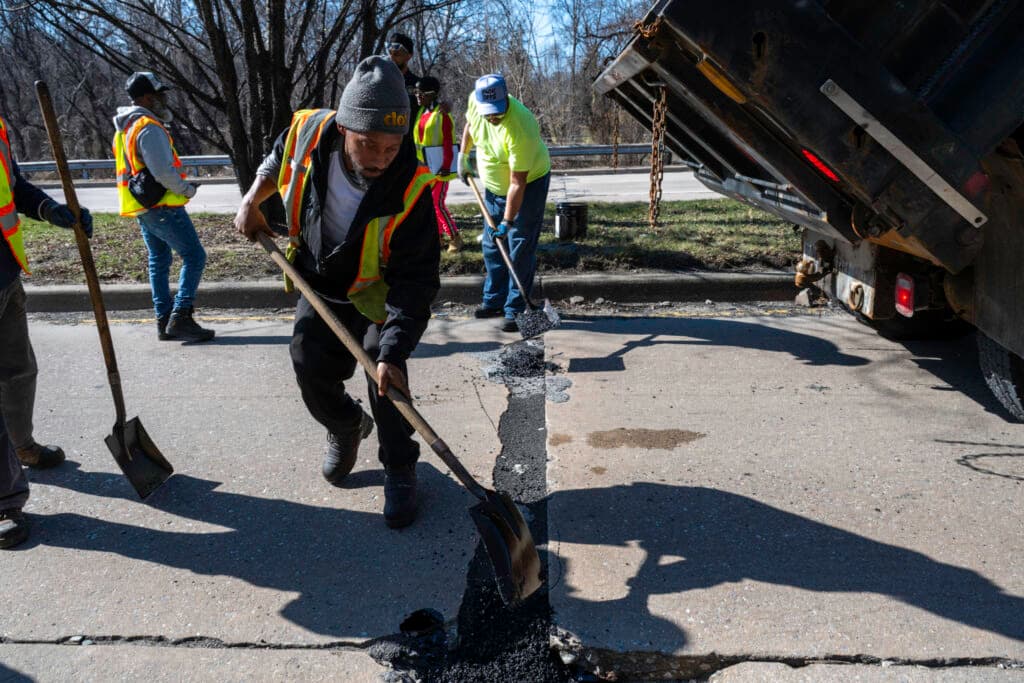
RALEIGH, NORTH CAROLINA — Local governments across North Carolina and the nation are struggling to fund road repairs as potholes and deteriorating infrastructure create a financial crisis for transportation agencies.
The visible signs of crumbling roadways reflect deeper budget constraints affecting everything from small-town streets to major highways. Transportation officials report that deferred maintenance, rising construction costs, and shrinking revenue streams have created a perfect storm for infrastructure decay.
Federal Gas Tax Remains Frozen Since 1993
Gas taxes, which traditionally fund road maintenance programs, have not kept pace with inflation and changing vehicle technologies. The federal gas tax has remained unchanged at 18.4 cents per gallon since 1993, even as electric vehicles and fuel-efficient cars reduce overall tax collection.
President Donald Trump has proposed temporarily suspending the federal gas tax to provide relief from surging fuel prices caused by the Iran war, a move that could further strain transportation budgets.
“What states end up doing, partly because resources are limited, is they’re sort of triaging the system,” said Rocky Moretti, the director of policy and research at TRIP, a nonprofit research group focused on transportation issues.
Road Conditions Show Little Improvement
Federal transportation data reveals that U.S. road conditions have remained largely stagnant over the past three decades. The share of roadways rated in acceptable condition peaked at approximately 91% in 1999 but has since declined to an average of around 80% in recent years.
This means roughly one in five roadways nationwide remain in poor condition, creating safety hazards and expensive vehicle repairs for drivers already facing economic pressures from fluctuating gas prices.
Technology Offers Potential Solutions
Some state and local governments are exploring innovative approaches to address infrastructure challenges more efficiently. These new technologies include artificial intelligence-powered road monitoring systems, sensors, and camera-equipped vehicles designed to identify road damage and prioritize repairs.
For drivers, the consequences of deteriorating roads often become apparent only after costly damage occurs. Tire blowouts, bent rims, and suspension repairs can transform routine commutes into expensive maintenance bills.
Cities like Baltimore demonstrate the scale of the challenge, with work crews filling at least 32,000 potholes from late February through mid-March. The city aims to fill another 25,000 potholes by mid-July, according to the Baltimore City Mayor’s Office.
Even with increased federal infrastructure funding in recent years, transportation officials and infrastructure experts say the growing need continues to outpace available resources, leaving communities to make difficult decisions about which roads receive attention first.