NC Senators Consider AI Restrictions in Healthcare and Insurance Billing
State lawmakers examine AI restrictions after concerns that automated systems are inflating medical bills and denying patient claims without human oversight.

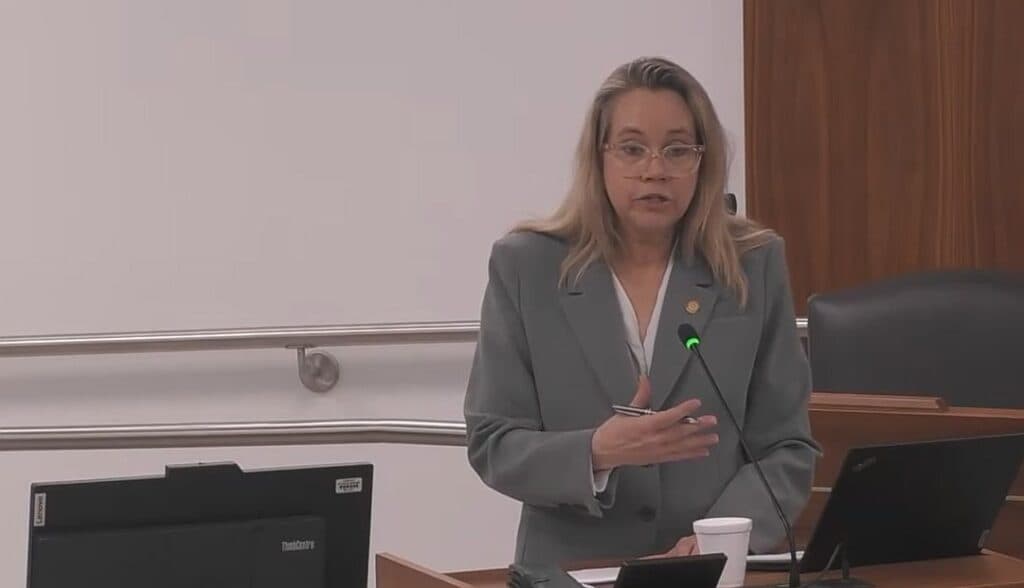
RALEIGH, NORTH CAROLINA — State lawmakers are examining new restrictions on artificial intelligence use in healthcare and insurance after concerns that AI systems may be inflating medical bills and denying patient claims without proper oversight.
Senator Amy Galey (R-Alamance) introduced a proposed committee substitute to House Bill 565 on Wednesday that would prohibit health insurers from denying claims based solely on AI algorithms. The legislation came before the Senate Health Committee as part of ongoing discussions about AI regulation in medical settings.
“If the AI does not approve the claim, it must be reviewed by a living human being,” Galey told committee members. “We do not want robots or computers to deny care to sick people.”
Concerns Over AI-Driven Medical Billing
The proposed legislation addresses what Galey describes as a growing problem with ambient AI in hospital coding and billing systems. She presented evidence suggesting that AI technology is being used not only to streamline medical charting but also to select the most profitable billing codes for patient diagnoses.
“[It’s] resulting in a higher bill that increases costs for insurers, including Medicaid and the state health plan and the patient,” Galey said during the committee hearing.
The senator referenced a report from Rice University’s Baker Institute for Public Policy showing that hospital service prices have surged more than 200% since 2000. According to Galey, the price increases are not driven by labor costs or sicker patients.
Balancing Innovation with Patient Protection
While acknowledging AI’s benefits in medical research, Galey emphasized the need for guardrails in healthcare applications. She noted that artificial intelligence has contributed to new disease understanding, innovative treatments, and operational efficiencies in medical settings.
However, Galey warned that AI in healthcare “has the potential to be disruptive and to contribute to increased costs for patients.” The proposed bill would require human oversight for AI-generated billing decisions and insurance claim denials.
“There is evidence that AI and hospital billing is driving the appearance of more serious diagnoses without corresponding changes in treatment,” Galey said, suggesting that AI systems may be inflating diagnosis severity to justify higher billing codes.
Legislative Next Steps
The Senate Health Committee heard testimony on the proposed changes to House Bill 565, though no immediate vote was scheduled. The legislation would create new regulatory frameworks for AI use in both insurance claim processing and hospital billing systems.
If passed, the bill would require health insurers to have human reviewers examine any AI-generated claim denials before final decisions are made. The measure would also establish oversight requirements for AI systems used in medical coding and billing to prevent automatic selection of higher-cost billing codes without clinical justification.
The committee substitute represents one of the first comprehensive attempts by North Carolina lawmakers to address artificial intelligence applications in healthcare settings, as the technology becomes increasingly prevalent in medical facilities across the state.