Cumberland Island Land Exchange Sparks Controversy Over Development Plans
Camden County rejects secretive federal plan that would allow 15,000-square-foot luxury estates on Georgia’s protected barrier island.

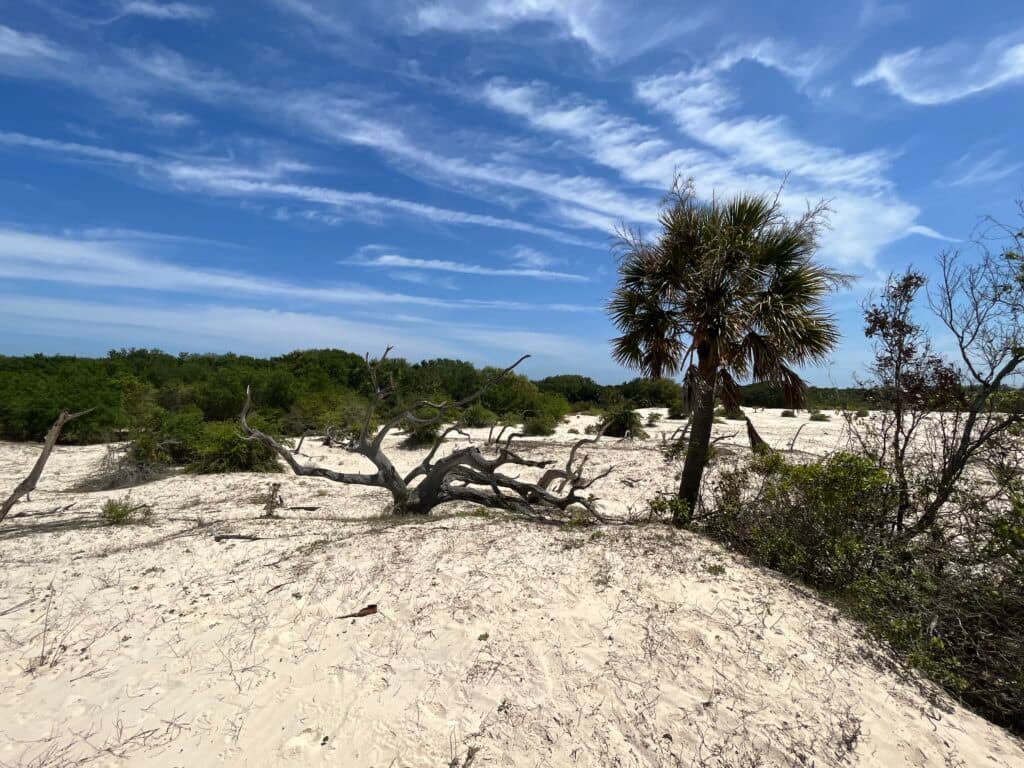
BRUNSWICK, GEORGIA — Camden County commissioners have rejected proposed land exchanges at Cumberland Island National Seashore that would have allowed private landowners to build luxury estates up to 15,000 square feet on public land, according to documents obtained through a Freedom of Information Act request.
The National Park Service has been working on agreements that would privatize portions of Cumberland Island, Georgia’s largest barrier island and one of the state’s last truly wild places. Internal documents reveal signed agreements and draft deeds for residential development, details the agency failed to disclose publicly.
Defenders of Wildlife obtained the records after filing a FOIA request regarding proposed land exchanges with private landowners. While the National Park Service previously identified four planned exchanges in public planning materials, the agency only produced documents for two of the proposals.
Closed-Door Decision Making Raises Concerns
The Camden County Commission was asked to support the exchanges without access to essential details about the luxury estate development plans. Commissioners rejected the proposal after the National Park Service moved forward with the plan behind closed doors and withheld key information from both the county and the public.
The rejected land exchanges represent the latest controversy in what critics describe as decades of mismanagement at Cumberland Island. When Congress created Cumberland Island National Seashore, lawmakers mandated that the island be “permanently preserved in its primitive state.”
Environmental Damage Goes Unaddressed
For years, non-native feral horses have caused extensive damage to the island’s ecosystem, including dunes, wetlands and wildlife habitat. In some areas, the horses have stripped up to 98 percent of native vegetation and trampled nesting sites for sea turtles and roosting shorebirds.
Despite acknowledging the severity of these environmental problems, the National Park Service has refused to develop a sustainable horse management plan for Cumberland Island. The seashore remains the only national seashore on the East Coast with an unmanaged horse population.
The agency has also failed to complete a wilderness management plan that is decades overdue. The seashore’s recently proposed Visitor Use Management Plan has drawn criticism for potentially increasing development pressure on the fragile ecosystem.
Public Input Process Under Scrutiny
Environmental advocates argue that the National Park Service’s handling of the land exchange proposals violates requirements for public input before major decisions are made. The agency’s failure to release complete information about all four planned exchanges has left two proposals in what Defenders of Wildlife describes as a “bureaucratic black box.”
The controversy highlights broader concerns about the future of Cumberland Island’s protected status. The island has maintained its appeal through remoteness and isolation rather than tourist amenities, but proposed developments could fundamentally alter its character.
Camden County’s rejection of the land exchange proposals sends a message that local officials expect greater transparency from federal agencies managing public lands. The commissioners’ decision may influence how the National Park Service approaches similar proposals in the future.