Ohio Republicans Propose Major Restrictions on Sports Betting Industry
Three GOP legislators want to ban online sports betting and impose strict wagering limits, calling gambling addiction comparable to illegal drugs.

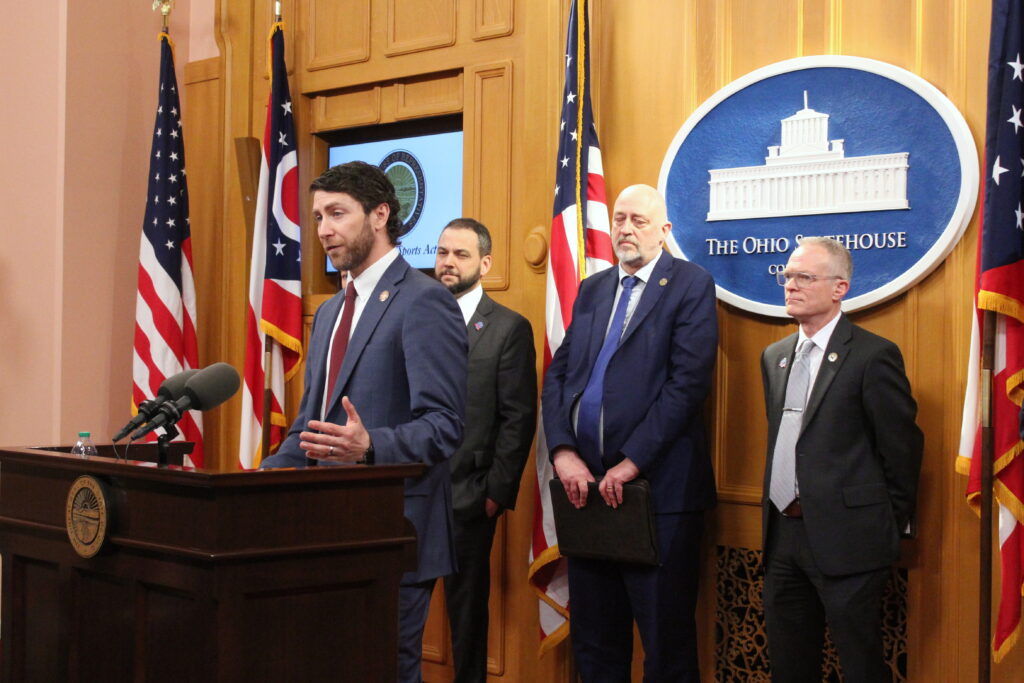
COLUMBUS, OHIO — Three Ohio Republican lawmakers unveiled legislation Wednesday aimed at imposing new restrictions on the state’s sports betting industry, including a ban on online and phone-based gambling.
State Representatives Riordan McClain of Upper Sandusky, Gary Click of Vickery, and Johnathan Newman introduced the proposed legislation during a press conference at the Ohio Statehouse. The lawmakers were joined by Center for Christian Virtue President Aaron Baer in announcing the reforms.
The proposed legislation targets multiple aspects of the current sports betting system in Ohio. Key provisions include eliminating online and mobile gambling platforms, establishing strict limits on individual wagers, and prohibiting the use of credit cards for betting transactions.
Advertising Restrictions Among Proposed Changes
The legislation also seeks to impose limitations on sports betting advertisements across the state. The lawmakers argue that current advertising practices contribute to problem gambling by making betting appear too accessible and appealing.
McClain and his colleagues warned that gambling addiction poses risks comparable to illegal drug dependency. They expressed concerns about the financial impact on Ohio residents and potential threats to sporting event integrity.
Targeting Mobile Gambling Platforms
The proposed elimination of online and phone-based betting would represent a major shift in Ohio’s sports wagering practices. Mobile platforms currently account for the vast majority of sports betting activity in states where they operate.
The lawmakers characterized their proposal as necessary consumer protection measures. They argued that the current system lacks adequate safeguards to prevent problem gambling and protect vulnerable residents.
Ohio legalized sports betting in recent years, joining numerous other states in allowing regulated wagering on professional and collegiate sporting events. The industry has generated significant tax revenue for participating states while creating new business opportunities.
Industry Impact and Implementation Questions
The proposed restrictions would affect existing sportsbook operators and licensed facilities across Ohio. The legislation’s impact on current employment and tax revenue generation remains unclear pending further legislative review.
The Republican lawmakers emphasized their commitment to addressing concerns about gambling addiction and its societal costs. They positioned the legislation as a responsible response to problems they believe have emerged since sports betting became legal.
The timing of the proposal comes as other states continue evaluating their own sports betting regulations. Some jurisdictions have implemented additional consumer protections while others have expanded betting options.
Legislative leaders have not yet announced committee assignments or hearing schedules for the proposed legislation. The bill would need to advance through standard legislative processes before potentially becoming law.
Sports betting operators and industry advocates have not yet responded publicly to the proposed restrictions. The legislation represents one of the most comprehensive attempts to limit sports wagering activities since Ohio authorized the practice.