Georgia Supreme Court Hears Arguments on Medical Monitoring for BioLab Exposure
Georgia’s highest court weighs whether companies must fund health monitoring for 90,000 residents exposed to toxic chemicals from the 2024 BioLab plant fire.

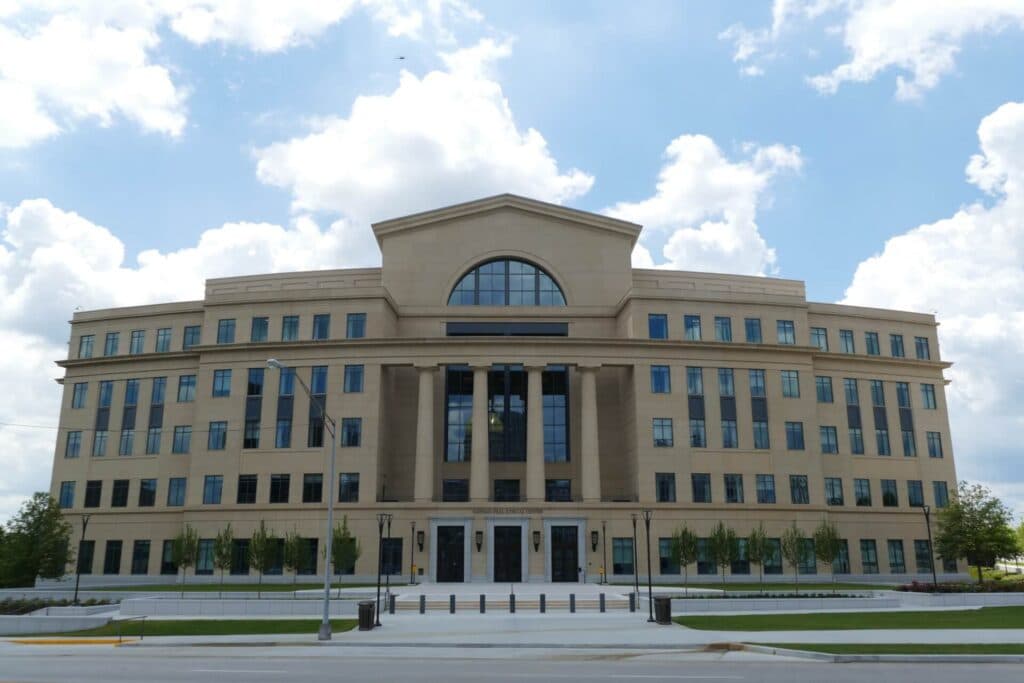
ATLANTA, GEORGIA — The Georgia Supreme Court heard arguments Tuesday in a case stemming from the 2024 BioLab chemical plant fire in Conyers that exposed thousands of residents to potentially toxic substances.
The central question before the justices: whether courts should be able to order companies responsible for chemical exposure to pay for long-term medical monitoring for affected individuals who have not yet developed illness.
90,000 Residents Affected by Chemical Fire
Attorney Michael Terry, representing a group of residents and companies claiming exposure to toxic substances, told the court that 90,000 residents were forced to evacuate or shelter in place following the fires. The massive cloud of smoke billowed from the BioLab facility for weeks after the initial incident.
While numerous residents suffered immediate physical symptoms, Terry argued that many others now face ongoing uncertainty about their health. “In a very real sense, thousands of people continue to live under that cloud, because for them, this is not yesterday’s news, but it’s also tomorrow’s news, next year’s news, next decade’s news,” Terry said during oral arguments.
“Because these citizens face an increased risk of serious, even deadly health complications. Their best protection is regular medical monitoring to enable early detection and treatment, and that necessity is a direct result of BioLab’s tortious conduct, and the victims shouldn’t have to pay for it,” he continued.
BioLab Argues Against Liability Without Present Injury
BioLab’s attorney, Michael Eber, countered that Georgia law has never recognized personal injury liability without a present physical injury. He warned that establishing such precedent could have far-reaching economic consequences for the state.
Eber noted that the case could potentially involve 2 million people who live within 25 miles of the Conyers plant. “Given the ubiquity of alleged toxins and pollutants in modern society, allowing that type of claim would generate costly litigation against a wide range of Georgia businesses that employ hundreds of thousands of Georgians,” he argued.
The BioLab attorney suggested that any decision to recognize medical monitoring claims should come from the General Assembly rather than the courts. “Because of the far reaching effects of those claims and the complex policy considerations at stake as to whether to recognize it, and if so, how to determine what the elements are, the General Assembly rather than this court should decide whether to recognize medical monitoring,” Eber said.
Federal Court Seeks State Guidance
The Georgia Supreme Court’s involvement stems from a request by a federal court handling a separate class-action lawsuit related to the BioLab incident. The federal court asked Georgia’s justices to clarify state law on medical monitoring before proceeding with the federal case.
The 2024 chemical plant fire created one of the largest environmental incidents in recent Georgia history, with the toxic plume affecting a wide swath of the metro Atlanta area. The court’s decision could set important precedent for how similar cases are handled in Georgia going forward.