Environmental Group Seeks Investigation into Alamance County Plant Polluting Haw River
Dangerous bacteria levels in Haw River exceed safe standards by 12 times as environmental group demands state investigation into failing treatment plant.

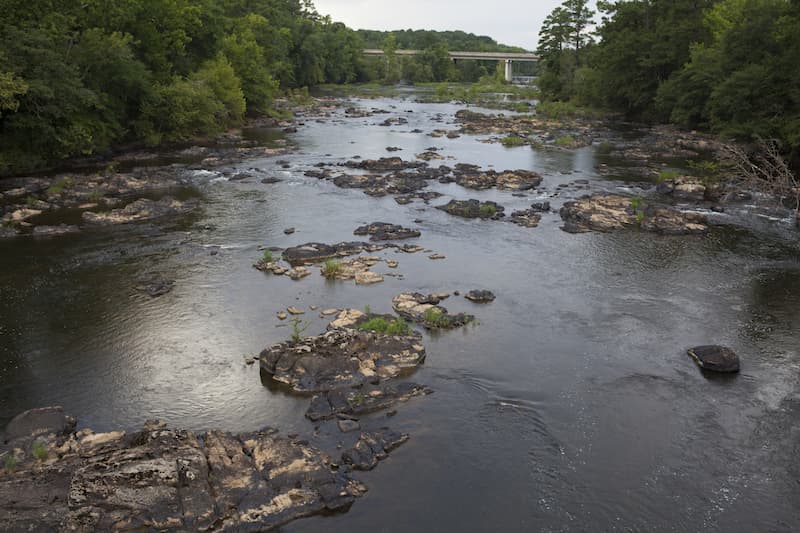
BURLINGTON, NORTH CAROLINA — Environmental advocates are urging state action against a wastewater treatment facility that has been releasing dangerous levels of bacteria into the Haw River for months.
The Saxapahaw wastewater treatment plant in Alamance County has been discharging high levels of fecal bacteria into the Haw River since early this year, according to a statement released Friday by Haw River Assembly. Water quality testing has revealed contamination levels that pose serious health risks to recreational users.
Dangerous Bacteria Levels Detected
Water quality sampling conducted by Haw River Assembly since the beginning of 2026 detected E. coli levels more than 12 times greater than levels deemed safe by Open Water Data in the plant’s discharge. Some water samples appeared brown in color, carried a foul odor, and contained floating solid material.
The North Carolina Department of Environmental Quality found similar readings on March 2, documenting fecal coliform in the plant’s discharge that exceeded state water quality standards. High levels of E. coli in recreational water can cause serious illness in people who come in contact with it.
Recreation Areas at Risk
The contamination threatens popular recreational activities on the Haw River. A local canoe and kayaking company operates rental services upstream of the wastewater discharge point, potentially sending customers directly through the contaminated zone.
“The Haw River is a beloved resource for our community — people swim here, paddle here and bring their families here,” said Emily Sutton, Haw Riverkeeper and executive director at Haw River Assembly. “With swim season fast approaching, we need this to be remedied as quickly as possible.”
Public health officials commonly close beaches and river access points when bacteria levels reach dangerous thresholds. The ongoing pollution has raised concerns about swimmer and paddler safety during the upcoming recreational season.
Investigation Demanded
Haw River Assembly is calling for DEQ to investigate the facility’s treatment failures and review the plant’s National Pollutant Discharge Elimination System permit. The environmental group wants stronger oversight measures implemented to prevent future contamination events.
The pollution has continued despite state monitoring, raising questions about enforcement mechanisms and the facility’s operational compliance. DEQ has not yet announced whether it will launch a formal investigation into the treatment plant’s violations.
The Haw River serves as a drinking water source for downstream communities and supports diverse aquatic ecosystems. Prolonged bacterial contamination could have lasting environmental impacts beyond immediate health risks to recreational users.